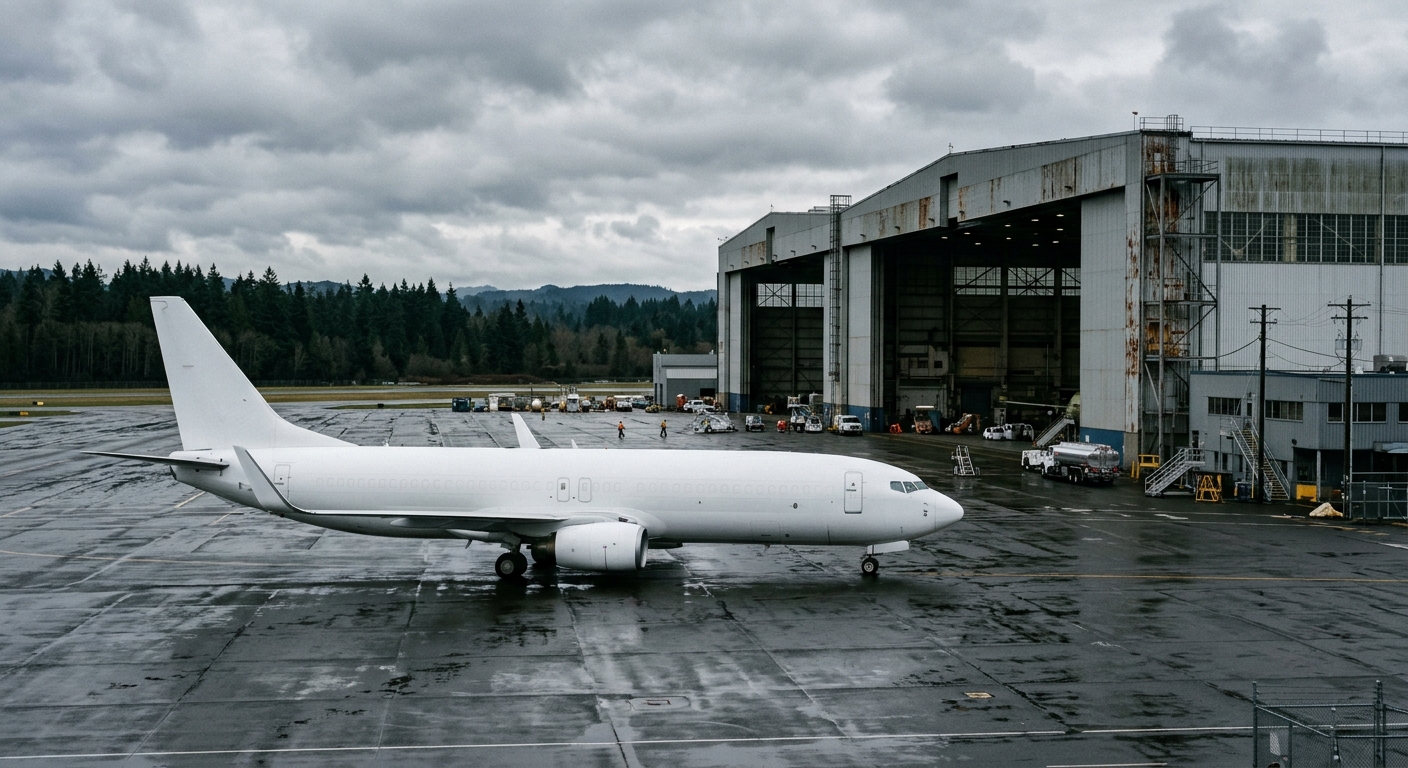
AI-generated illustration; not a photograph of the reported event.
- calendar_today October 29, 2026
Revenue Rises, But Profitability Lags in Boeing Commercial Airplanes
Boeing reported a rise in total revenue during its third-quarter earnings presentation, even as profits in its commercial airplane division dipped. CEO Kelly Ortberg outlined the aerospace company’s recent milestones, including the certification of the 737 MAX 7 and 10 models, a large contract for the U.S. Navy’s sixth-generation fighter jet, and the delivery of 161 commercial aircraft through the third quarter—the highest output since 2018.
Boeing’s Overall Financial Performance
The company’s total revenue for the quarter reached $24.2 billion, a 4% increase compared to the same period last year. Operating margins improved by 1.5%, and Ortberg signaled confidence in Boeing’s ongoing recovery, even as he cautioned that progress would not always be linear. Despite the revenue increase, Boeing’s commercial airplane division reported a 3% decrease in revenue from the previous year, with operating margins at -6.5%—marking an improvement from last year but still firmly negative.
Outlook for Free Cash Flow
Ortberg projected that Boeing should generate $2 billion in free cash flow in 2026, with an additional $1 billion expected in 2027, factoring in costs related to the F/A-XX fighter jet program. Looking further ahead, free cash flow is forecasted to climb to $6 billion in 2028 and to $10 billion by 2029. CFO Jay Malave noted that these targets assume the 777X model achieves certification by mid-2027 and depend on higher deliveries of 737 and 787 models, as well as improved margins and positive contributions from other Boeing divisions.
Commercial Airplane Delivery Backlog Hits Record
Boeing’s commercial division is facing a record aviation backlog of $612 billion, including over 6,300 aircraft. New quarterly orders from Turkish Airlines, Ethiopian Airlines, and Lufthansa contributed to this backlog. However, Boeing delivered 124 737 MAX planes during the quarter. Malave indicated the ongoing challenge of stabilizing production at 47 planes per month means Boeing is likely to fall short of its annual target of 500 deliveries for the 737 MAX.
737 MAX Production and Aviation Supply Chain Challenges
Boeing’s 737 MAX production rate currently stands at 47 aircraft per month, after passing the Federal Aviation Administration’s capstone review. Ortberg acknowledged persistent supply chain difficulties, especially in wing production, that have affected production stability. The Everett factory recently saw the first 737 MAX 10 roll off the line, though getting the North Line fully certified and boosting output to the planned 52 planes per month remains a goal for the future. Stabilizing wing and fuselage production—critical components made in Kansas—remains a focus as the company aims to achieve sustained performance.
Defense and Services Divisions Show Growth
While the commercial airplanes segment grapples with margin pressure and supply chain costs, Boeing’s Defense, Space & Security and Global Services divisions posted revenue growth of 15% and 4%, respectively, this quarter. These increases helped offset some of the declines in the commercial segment.
Progress Toward 777X Certification and Production
With the 737 MAX 7 and 10 now certified, Boeing is turning its attention to the 777-9, part of the much-anticipated 777X series. Ortberg reported continued progress in the 777X flight test program, with first deliveries expected in 2027. Production is currently running at about one airplane per month, a rate that is expected to persist through most of 2027 as the company works toward certification.
Stock Market Reaction and Looking Ahead
Despite the operational achievements and forward-looking projections, Boeing’s stock price dropped by nearly 11% on the day after the earnings were reported. Ortberg stated that, after the completion of the 777X program, Boeing plans to reallocate resources and spending toward new development programs. The aerospace giant continues working to meet delivery targets and address ongoing aviation supply chain challenges in its commercial aviation business.
Source: heraldnet.com.