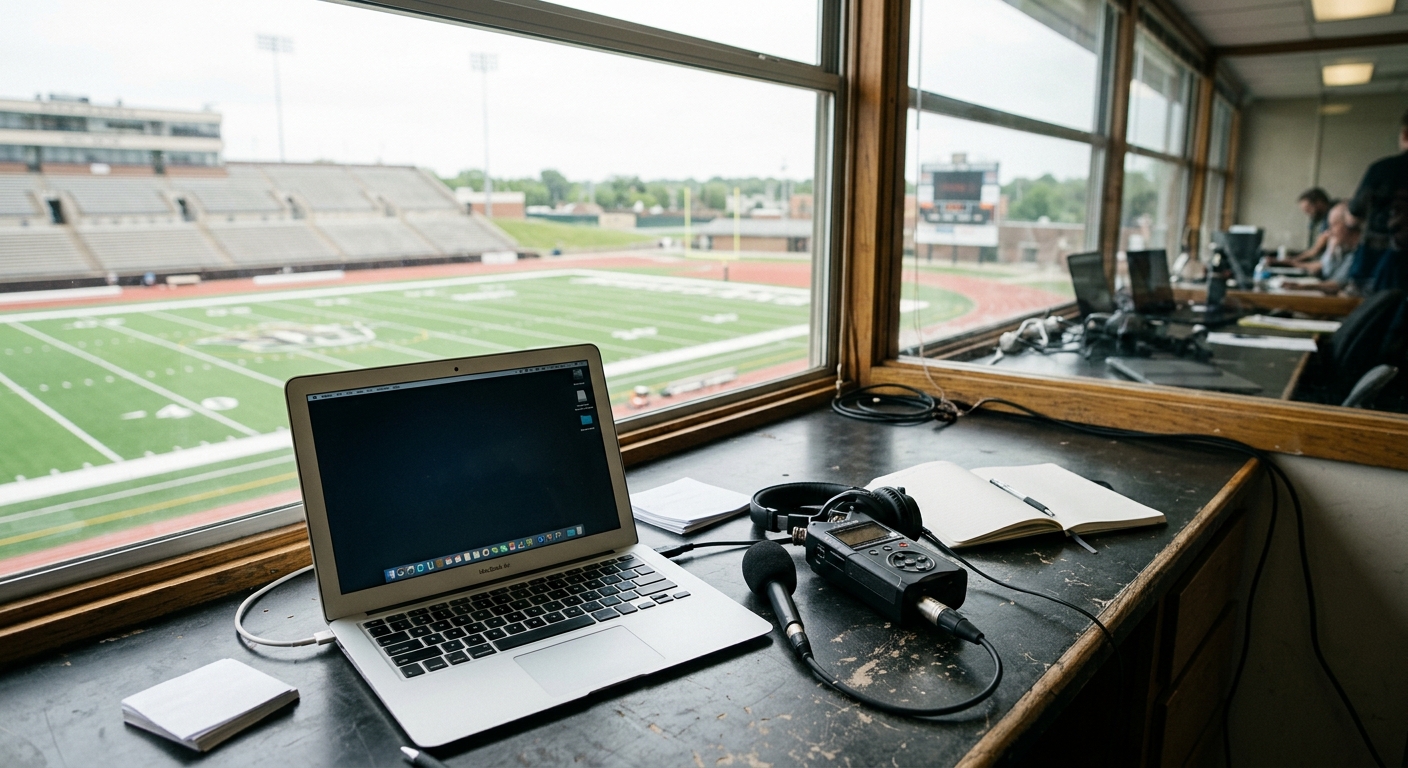
AI-generated illustration; not a photograph of the reported event.
- calendar_today October 9, 2026
WSU Introduces AI Technology in Athletics Communications
Washington State University (WSU), renowned for producing prominent sports journalists such as Keith Jackson, Art Eckman, and Cindy Brunson, is taking a major step by integrating artificial intelligence (AI) into its athletics department’s storytelling. On Monday, the university announced a new partnership with FanWord, a Nebraska-based AI startup established in 2019, in an effort to enhance efficiency and broaden the scope of its media communications.
About the FanWord Partnership
FanWord, which collaborates with over 250 educational institutions across the United States, provides technology designed for tasks such as game recaps, feature stories, player bios, award nominations, transcriptions, and a variety of editorial content. According to Athletic Director Jon Haarlow, the collaboration intends to “elevate our storytelling while improving our efficiency.”
Specifics regarding how this AI integration will affect WSU staff and student internships were not outlined in the university’s release.
Community Reactions and Concerns
The announcement sparked discussion among journalists and alumni. Sam Taylor, a sports reporter for the Lewiston-Tribune and WSU Murrow College of Communication graduate, questioned why the university would use AI to produce feature stories about student-athletes and coaches. Taylor expressed concern that automating content could diminish valuable learning opportunities for students preparing for careers in sports journalism.
“I really hope it has a minimal role in the writing process, but it doesn’t seem like that will be the case,” Taylor said. He noted the unique experience students gain through hands-on internships, including conducting interviews and developing writing skills within the athletic department.
WSU’s Perspective on Student Involvement
Bobby Alworth, WSU’s athletics department spokesman, stated that the FanWord partnership is intended to be a supportive tool, not a replacement for student opportunities. Alworth said key tasks, including game reporting and statistics, would be managed through the platform to streamline workflows, such as producing AP-style recaps of games. He emphasized, “Students will still have opportunities to interview; it also helps our athletes who may not have experience with the media.”
Alworth clarified that no full-time staff positions were eliminated due to the partnership. The university reportedly continues to prioritize hands-on experiences for student interns, with ten Murrow College students currently working in the department — the highest number in years, according to Dean Bruce Pinkleton.
Comparisons with Other Institutions
Gonzaga University, another institution in the region, previously partnered with FanWord but ended the agreement after one year due to budget cuts. Barrett Henderson, a spokesman for Gonzaga athletics, described FanWord as a helpful research tool for compiling statistics and handling routine editorial tasks, but Gonzaga opted not to use its feature story capabilities due to additional costs.
Henderson also acknowledged the ongoing importance of student employees within the athletic department and noted that while departments are shrinking nationwide, students remain vital contributors.
Balancing Innovation and Student Experience
Some in the field, like Aarik Long, a former Murrow student and sports editor in North Carolina, appreciate AI’s efficiency for tasks such as making data accessible and easily digestible. However, Long cautioned that reliance on AI could risk errors and potential “fabrications,” reinforcing the need for human oversight.
The university’s new three-year contract with FanWord reportedly costs $5,000 per year, with Alworth describing it as an opportunity for both the department and students to learn and adapt together. As WSU explores content automation and AI-driven solutions within media storytelling, questions persist regarding the long-term impact on student internships and the future of sports communications.
Source: heraldnet.com.