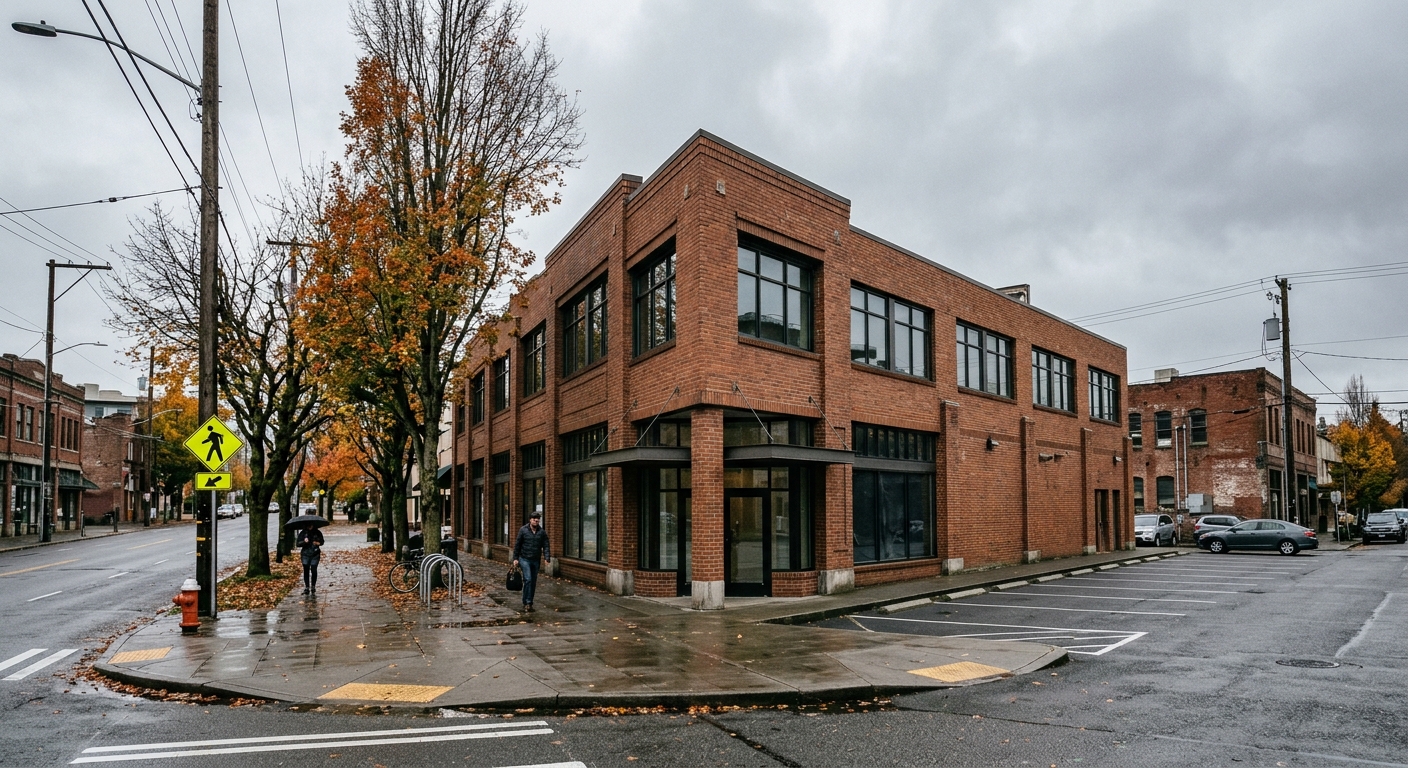
AI-generated illustration; not a photograph of the reported event.
- calendar_today October 22, 2026
Land Use Process Begins for Central Crisis Care Center
The transformation of the former Polyclinic building at 1110 Harvard Ave in Seattle into the new Central Crisis Care Center emergency mental health facility reached an important milestone this month. King County has submitted a Master Use Permit (MUP) application as officials target a late 2027 opening for the Broadway crisis center. This move marks a significant step in the county’s $56 million initiative to overhaul the three-story structure into a modern behavioral health facility.
Scope of the Broadway Crisis Center Renovation
The renovation project aims to convert the existing building into an acute behavioral health care center, following the principle of a “no wrong door” approach. This means the facility will maintain an open-door, 24/7 walk-in policy, providing emergency mental health services to all individuals who arrive. Plans include both interior and exterior improvements, emphasizing trauma informed design and accommodating the unique needs of individuals of all ages.
Key Design and Land Use Changes
The Master Use Permit outlines significant changes to the property’s exterior and access. The proposal would eliminate 17 on-site parking spots, instead relying on two accessible on-street spaces, and manage over 2,000 square feet of earth disturbance on Harvard, Broadway, and E Union as entrances are reconfigured. While no upgrades or new uses are currently detailed for the long-vacant southern portion of the parcel, the main renovations focus on the existing building and immediate surroundings.
Funding and Regulatory Milestones
King County acquired the building for $41.5 million. An additional $11.5 million to $14.5 million is allocated for renovation and operational start-up costs. The Master Use Permit process serves as the official regulatory gateway for land use changes in Seattle, required before construction permits can be issued. While litigation or appeals could delay the project, major alterations are unlikely unless substantial legal concerns arise, especially since the renovation does not involve significant expansions or rezoning.
Public Safety Planning and Community Input
Land use updates intersect with broader public safety planning around the Broadway crisis center. The Seattle Community Advisory Group, formed to guide neighborhood impacts, is overseeing the allocation of a $3 million county mitigation fund to address street disorder and crime near the facility. As part of the MUP application, environmental design changes such as sidewalk improvements, better lighting, and secured corridors are proposed to prevent crime and support safe access.
Early discussions within the advisory group have raised concerns about open-air drug markets, gun violence, property crime, and the potential for unresolved problems if strong discharge planning is not implemented. The center is intended to be the second of five behavioral health facilities funded by the 2023 voter-approved levy, with Connections Health Solutions selected as the operator for the new location.
Next Steps and Advisory Group Meeting
With the MUP review underway, the county aims to keep renovations on track for a 2027 launch. The Central Crisis Care Center advisory group will hold its next monthly meeting on Thursday, October 22. The meeting will be hybrid, hosted both at the King County Department of Community and Human Services in Seattle and via Microsoft Teams.
Source: capitolhillseattle.com.