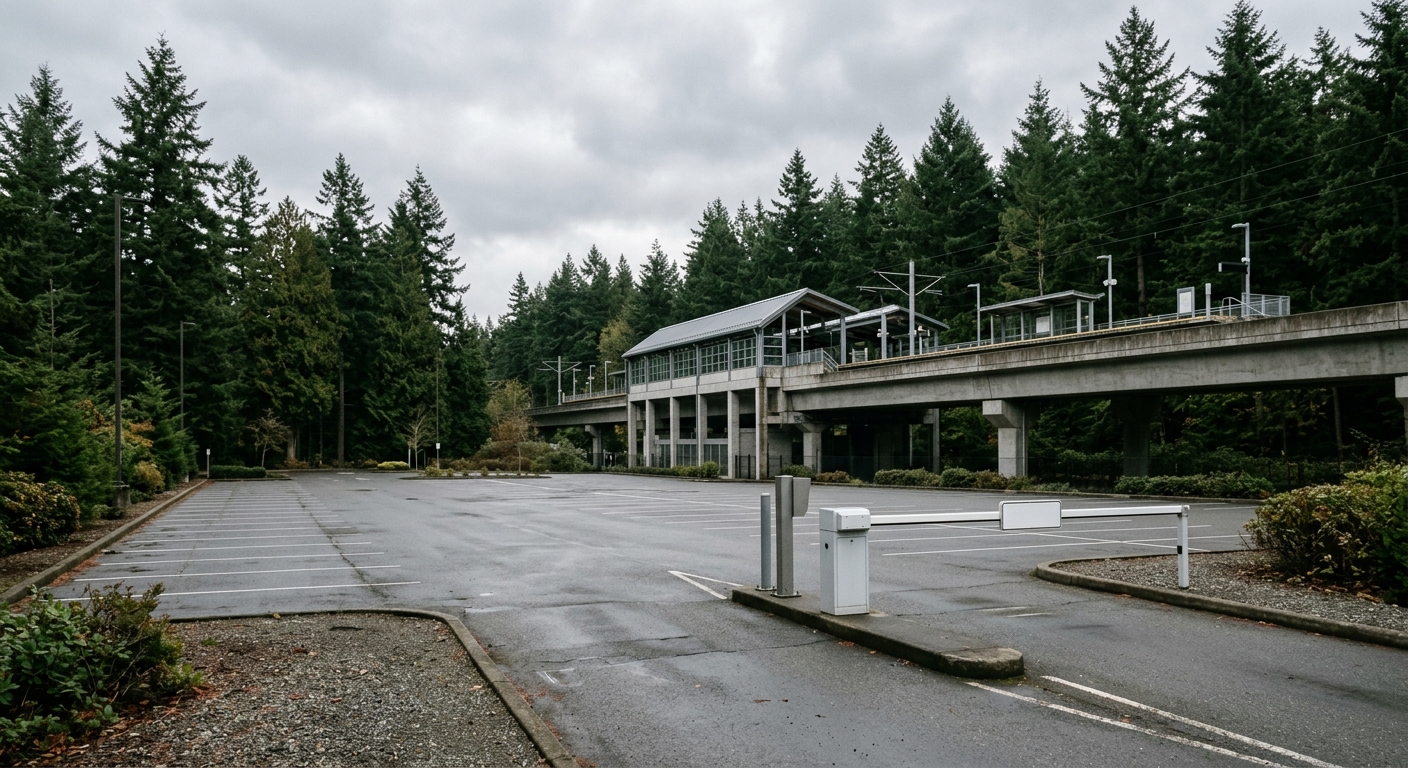
AI-generated illustration; not a photograph of the reported event.
- calendar_today October 13, 2026
Lynnwood City Council Approves Paid Parking Extension
The Lynnwood City Council has voted to continue allowing paid parking in commercial areas for another six months. On Monday, the council approved the extension with a 6-1 vote, with Council member Isabel Mata voting against the measure. The ordinance, which was originally adopted in May 2026, was put in place to address high parking demand around the city's light rail station ahead of the FIFA World Cup.
Background on the Paid Parking Ordinance
The initial six-month ordinance was intended as a temporary measure to manage the surge in parking demand brought by major events and growing transit use. The ordinance gave commercial properties the option to charge for parking, creating a new model for managing lynnwood parking near the increasingly popular light rail.
Community Planning Manager Karl Almgren explained that the extension would allow the city to assess whether other property owners would participate in commercial parking and further alleviate pressure on nearby transit access points.
Participation from Northline Village
So far, only the developer of Northline Village, a large mixed-use project near City Center, has joined the paid parking program. Almgren noted that despite significant delays in Northline Village’s construction due to rising costs, the developer had converted a paved, empty lot at 19800 44th Ave. W., near the light rail, into a paid lot with 200 spaces. According to Almgren, the parking at this location has been well utilized, reflecting the overall parking demand in the area.
Potential for More Commercial Parking Operators
Alderwood Mall, a major retail destination, is also considering implementing paid parking in its highest demand sections, according to Development and Business Services Director Ben Wolters. Almgren mentioned that questions had arisen regarding the possibility of additional fees or use taxes related to temporary parking fees, adding that the council may discuss such measures when the extension expires in June. Currently, the city collects sales tax revenue from paid parking operations.
Public Response and Council Discussion
During Monday's public hearing, only one Lynnwood resident, Quinn Van Order, provided feedback, expressing concerns about the possibility of temporary measures becoming permanent. "Nothing persists like the temporary," Van Order said, warning that the city might become reliant on this new revenue stream if not careful.
Several council members voiced support for the paid parking extension but were cautious about making it a permanent part of the city’s strategy. Council President Nick Coelho supported the extension as a way to observe how the upcoming farmers market at the light rail station, expected by late spring or early summer 2027, could affect parking patterns.
Council member Isabel Mata opposed the extension, arguing that paid parking does not address the root causes of parking issues and instead emphasized investing in better transit access, walking, and biking infrastructure. "A lot of our residents don’t have cars, and if they’re not able to get to the transit center, then we have a bigger problem," she said.
Council member David Parshall suggested that the city could continue improving transit access while also providing temporary solutions like the current paid parking extension, seeking a balance to manage spot challenges faced by residents and commuters.
Looking Ahead
The Lynnwood City Council will revisit the commercial paid parking ordinance when the current extension expires in June 2027. At that time, they may consider potential changes to fees or taxes associated with paid parking, as well as the overall impact of the ordinance on parking demand and transit access.
Source: heraldnet.com.