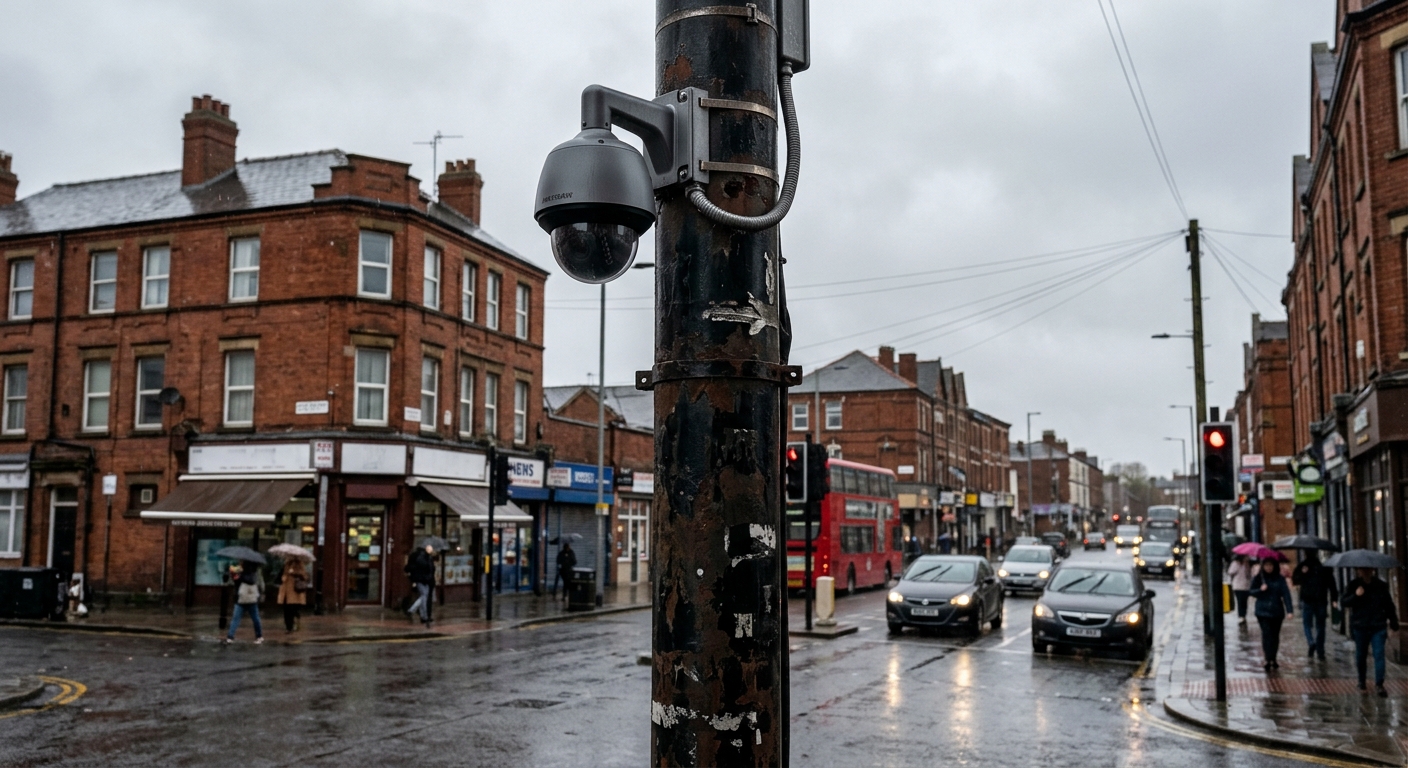
AI-generated illustration; not a photograph of the reported event.
- calendar_today November 12, 2026
Rinck Moves to Halt Police Camera Expansion in Capitol Hill and Central District
Seattle City Councilmember Alexis Mercedes Rinck is seeking council support for a budget proviso that would pause the rollout of new police surveillance cameras in the Capitol Hill and Central District neighborhoods. The expansion, part of the city’s Real Time Crime Center, is contingent on the Seattle Police Department (SPD) implementing privacy safeguards recommended by the Office of the Inspector General (OIG).
Mayor Wilson Lifts Expansion Pause Amid Ongoing Privacy Audit
The call for a delay follows Mayor Katie Wilson’s decision to lift a previous hold on the project. Mayor Wilson had paused the Capitol Hill and Central District camera rollout earlier this year after concerns surfaced from a privacy audit, which identified constitutional risks, technology gaps, and policy deficiencies within the police surveillance program. The OIG’s reviews corroborated these findings, pointing to similar shortcomings in current system oversight and technology.
Privacy and Civil Rights Concerns Remain Unresolved
Rinck expressed significant reservations about the expansion, citing “deep concerns about surveillance technology from civil rights implications, policy oversight gaps, and the efficacy of this technology.” She emphasized that additional oversight is required before more cameras are deployed and announced the support of South Seattle Councilmember Eddie Lin and at-large Councilmember Dionne Foster. However, Rinck’s proviso requires a total of five votes to pass. She has urged community engagement as the final council votes on the city budget are set to begin Friday.
Recommended Safeguards by the Office of Inspector General
The OIG recommended several measures for the SPD and city leadership, seeking to minimize unauthorized surveillance and enhance transparency. Among the recommendations are requirements that Axon Fusus software include case numbers and formal justifications before analysts can view camera feeds, thus preventing proactive or unauthorized monitoring. The OIG also called for explicit policy development related to the integration of privately owned cameras, including geographical limits, clear retention rules, protocols to avoid monitoring private spaces, strict search logging, and heightened civil liberty controls for stored data in databases such as Automated License Plate Readers.
Financial and Geographic Scope of the Camera Systems
The proposed camera system for Capitol Hill, although budgeted, has never been installed. The plan covers Broadway from Capitol Hill Station to the Pike/Pine corridor, focusing on the neighborhood’s nightlife core. The Central District’s system is intended to bolster safety around Garfield High School, with coverage from E Cherry to S Jackson and from 20th to 26th avenues. The estimated installation cost for Capitol Hill cameras stands at $400,000, with an annual operating budget of $35,000. The Central District's system is budgeted at $425,000, also with $35,000 in ongoing yearly costs.
Council Faces Budget Decisions Amid Surveillance Debate
The Seattle City Council is in the final stages of the 2027–2028 budget process. The current budget plan includes reallocations within the city’s finances, such as tapping into $31 million from JumpStart payroll tax reserves and reducing pension transfers by $22 million to address a looming deficit. The outcome of Rinck’s proviso remains uncertain as debate continues over surveillance technology, privacy, and fiscal priorities.
Related coverage
Source: capitolhillseattle.com.