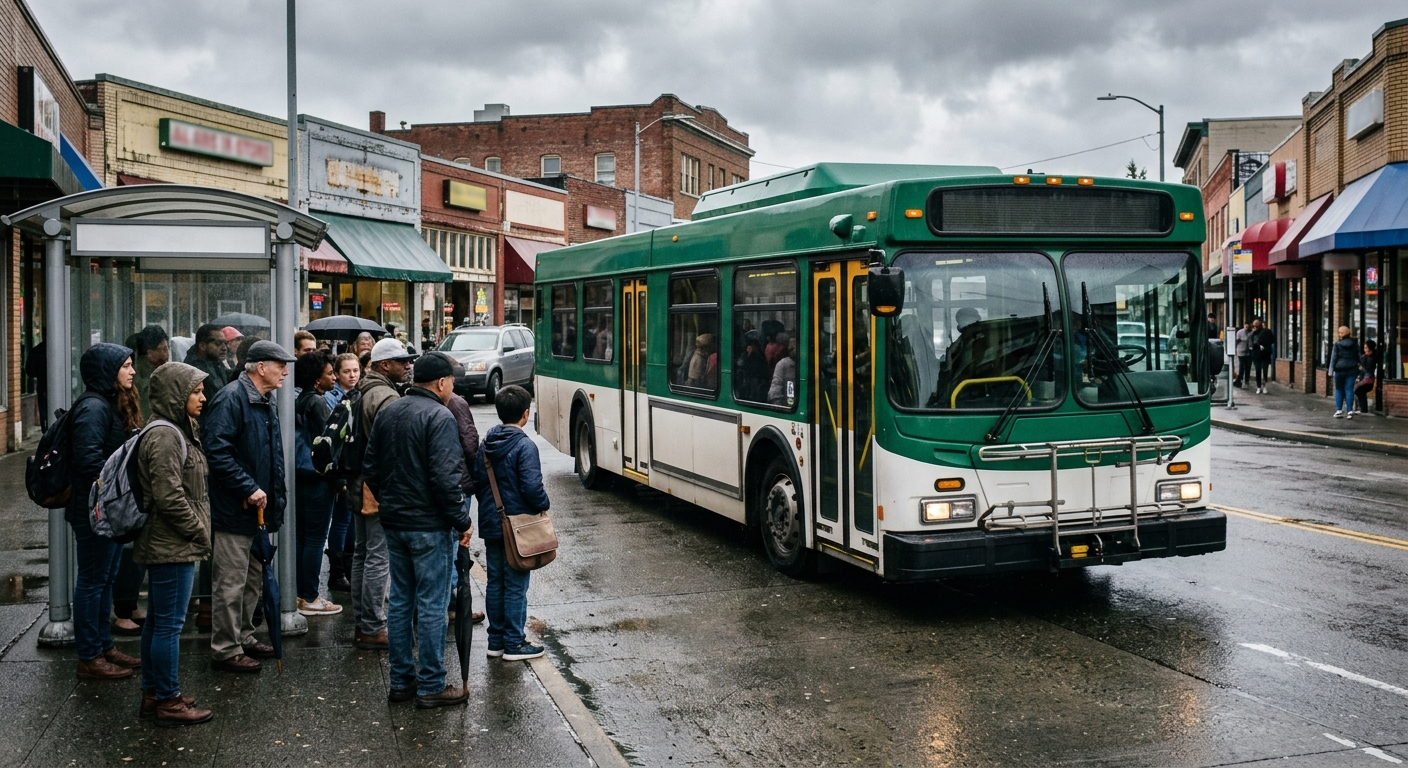
AI-generated illustration; not a photograph of the reported event.
- calendar_today September 7, 2026
Route 7’s Role in Washington State Transit
In Washington State, Route 7 has long held its place as a staple of Seattle’s public transportation network. This historic bus line, weaving through the city’s Rainier Avenue, is renowned for its deep connection to the communities of Rainier Valley and South Seattle. As plans progress to transition Route 7 into the enhanced RapidRide R Line by 2032, local residents and transit advocates are reflecting on both the line’s storied legacy and the significant changes on the horizon.
A Lifeline Through Rainier Valley
For decades, Route 7 has served as more than a simple Seattle bus. It is a vital conduit for Rainier Valley’s racially diverse neighborhoods, connecting residents to downtown, schools, and essential services. In an area shaped by gentrification and shifting demographics, the bus remains a unifying thread, sustaining the mobility of communities often underserved by other transit options. Many neighborhood residents have relied on Route 7 for daily commutes, errands, and maintaining social ties across South Seattle.
Transit Challenges and Community Resilience
Despite its significance, Route 7 is no stranger to bus delays and repeated bus clustering, issues familiar to many in Washington State’s urban corridors. Riders have expressed frustration with inconsistent schedules, but these challenges haven’t diminished the sense of camaraderie aboard the “people’s bus.” Instead, they have arguably intensified Route 7’s role as a crucible of local life, where shared inconveniences often spark conversation and solidarity between strangers. These transit challenges shape not only the logistics of travel but also the unique culture found on the line.
Memorable Encounters and Bus Stories
Throughout its history, Route 7 has been the backdrop to countless human stories. Riders frequently share bus stories that capture humorous, dramatic, and poignant moments, reflecting the diversity of its passengers. From music played out loud to spontaneous acts of kindness, Route 7 cultivates encounters rarely witnessed along other public transit routes. These experiences reinforce the bus’s reputation as a space where the city’s unique personalities come together, offering a living snapshot of Seattle every day.
Upcoming Changes: Transition to RapidRide R Line
Looking forward, the Seattle Department of Transportation and King County Metro plan to replace Route 7 with the RapidRide R Line by 2032. This upgrade aims to transform Rainier Avenue into a more efficient, transit-prioritized corridor, promising increased reliability and modernized service. The RapidRide R Line is expected to curb common problems like bus clustering and tardiness, enhancing the experience for South Seattle riders. However, some community advocates emphasize the importance of maintaining the inclusive character that has defined Route 7, even as new technologies and transit designs take hold.
Regional Impact and the Road Ahead
The future of Route 7 represents a pivotal moment for Washington State transit infrastructure. As the RapidRide R Line reimagines Rainier Avenue, the project underscores both progress and the complexities of change. Local leaders and riders alike acknowledge that any transformation must serve the diverse fabric of Rainier Valley and South Seattle, honoring the history and community spirit that make this corridor unique.
Ultimately, Route 7 remains more than a bus route—its legacy is steeped in the everyday realities, challenges, and triumphs of generations of Seattle residents. As Washington State looks to the next chapter in local public transit, the lessons of Route 7’s past will continue to inform a more accessible and inclusive future for all.