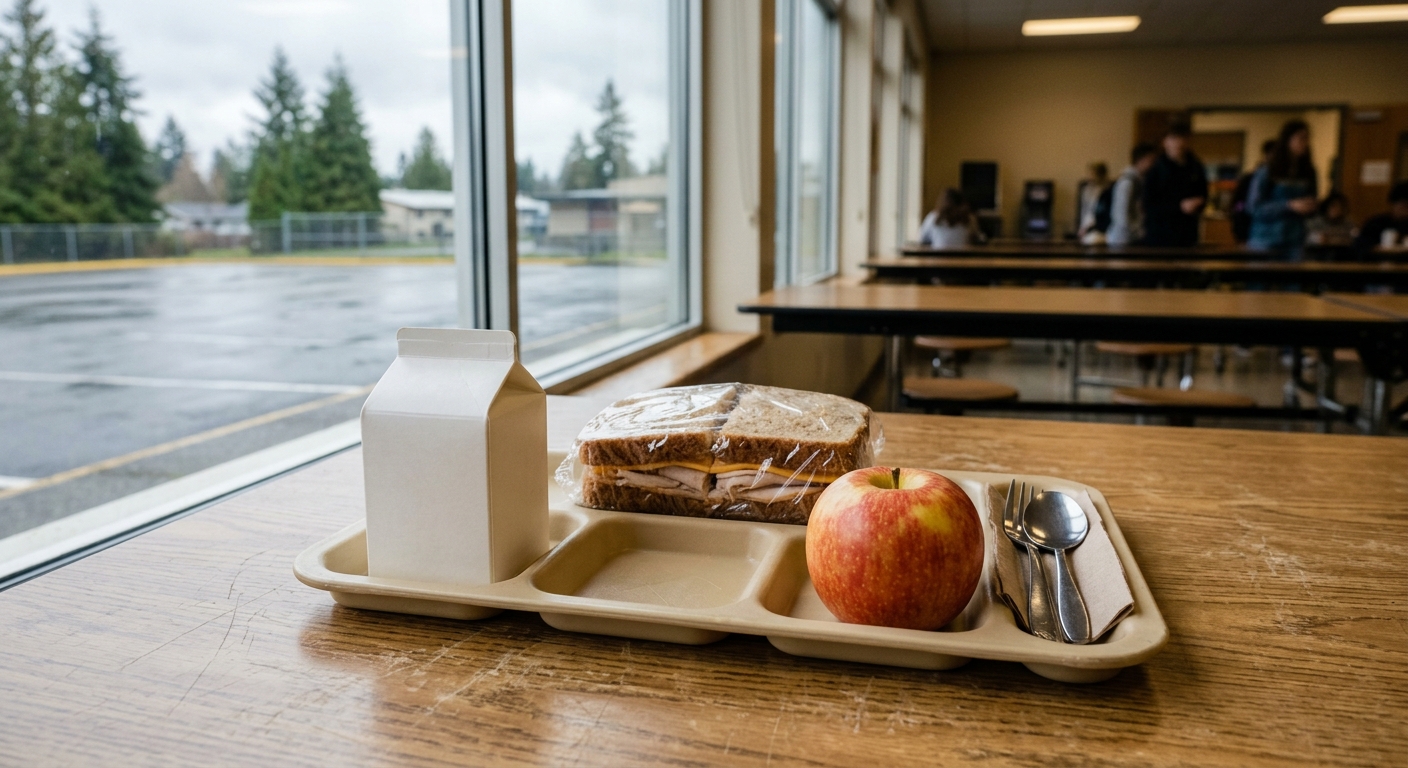
AI-generated illustration; not a photograph of the reported event.
- calendar_today July 24, 2026
In a significant move for Washington State’s education system, the Seattle City Council is advancing a new plan to fund universal school meals in Seattle Public Schools, covering every student for the 2026–2027 academic year. The proposal, announced by Council President Joy Hollingsworth and Councilmembers Dionne Foster and Dan Strauss, would allocate $3.6 million annually from the city’s general fund to guarantee free school meals for all district students. The initiative reflects mounting public demand for equitable access to nutrition and marks a pivotal development in regional school policy.
Council Reconsiders School Meals Strategy
The path to universal school meals in Seattle has involved robust community input and considerable policy debate. Initially, the city council voted to delay the rollout of free meals, opting instead to entertain a system of food vouchers targeted at youth identified as food-insecure. This move, which followed a lengthy committee meeting, drew pushback from education advocates and families across Washington State, many of whom argued that targeted programs fail to capture all students facing food insecurity. In response, members of the city council have now prioritized a universal approach, seeking swift amendment to the mid-year supplemental budget allocation to support it.
Funding Challenges and Budget Implications
The council’s commitment to universal school meals comes amid looming fiscal challenges for Seattle’s municipal finances. Mayor Katie Wilson previously recommended channeling resources through the Families, Education, Preschool, and Promise Levy, anticipating eventual support from state tax revenues—specifically, the so-called “millionaires tax” dedicated to educational funding. However, with the city general fund facing a projected $175 million deficit, concerns have been raised about long-term sustainability of the proposal. Council leadership, nonetheless, views the annual budget need as a justified investment in student well-being.
Equity and Access in Seattle Public Schools
The debate over school meals funding lies at the intersection of equity, local politics, and growing community advocacy. Supporters stress that Seattle Public Schools serve a diverse population, with thousands of families at risk of food insecurity. District stakeholders argue that universal programs reduce stigma, ensuring every child receives the nutrition required for academic success. The plan aligns Seattle with a broader trend seen across Washington State and the nation, with school districts reevaluating how best to combat childhood hunger.
Committee Vote and Road Ahead
The next major milestone for the initiative occurs on August 4, when the council’s Finance, Native Communities & Tribal Governments Committee will hold a critical vote. If approved, the amendment will redirect approximately $3.6 million annually from the city’s general budget, launching the effort in time for the school year 2026. Lawmakers emphasize the importance of a transparent process and ongoing community engagement to ensure efficient and effective deployment of resources.
Balancing Universal and Targeted Programs
While the shift towards universal school meals is met with optimism, city leaders and advocates are also considering how best to combine broad support with targeted assistance. The initial debate between universal meals and food vouchers underscores the complexity of addressing food insecurity in an urban setting. Ultimately, both councilmembers and Mayor Katie Wilson have reiterated a shared commitment: to guarantee that every student in Seattle, and by extension Washington State, has consistent access to nutritious meals regardless of background or income.
Community Response and Broader Implications
The announcement of dedicated school meals funding for all students reflects a responsive government attuned to local needs. As the proposal heads toward a final committee decision, many hope Seattle’s example will inspire similar programs beyond city limits. With thoughtful budget allocation and ongoing evaluation, the region may set a new standard for protecting and nourishing its youngest residents during the 2026–2027 school year. The outcome could have lasting effects on students, families, and communities across the Pacific Northwest.