- calendar_today August 9, 2025
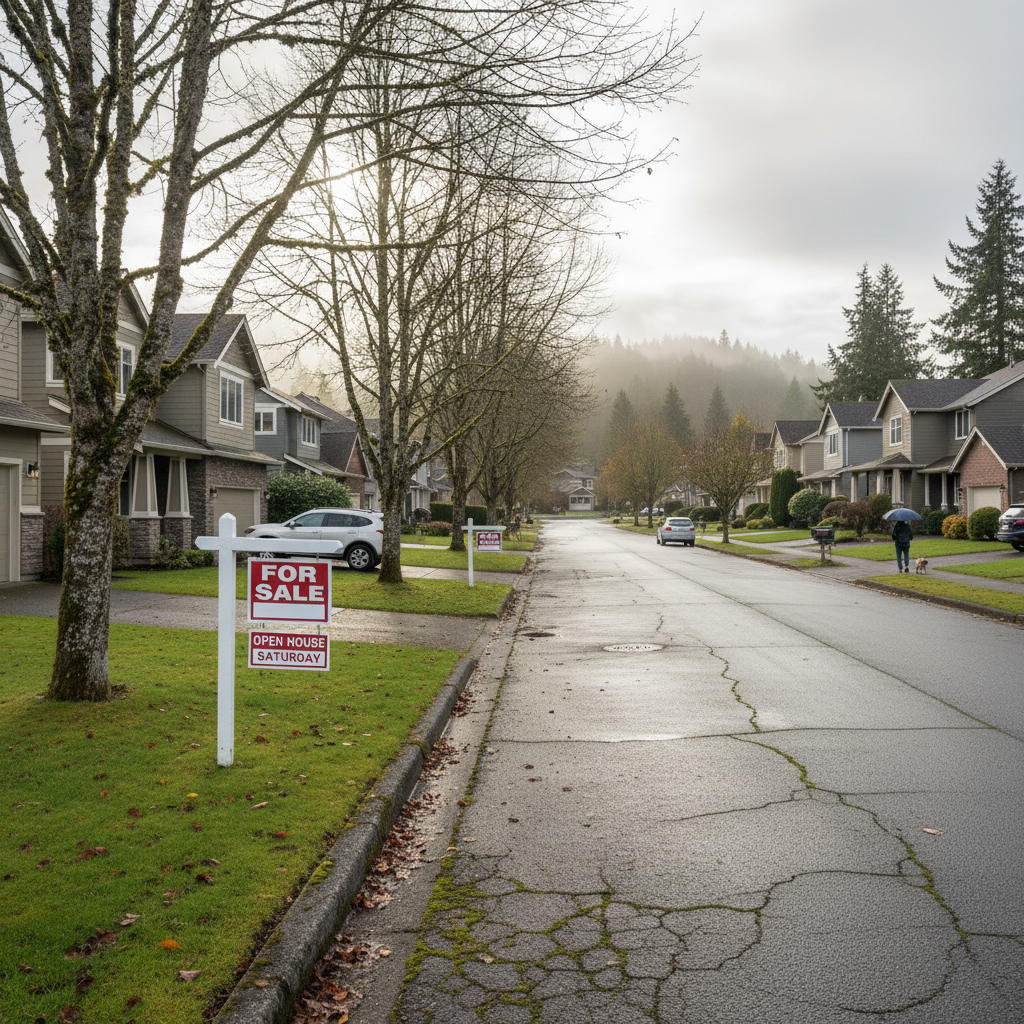
After years of strong growth, Washington State’s housing market has entered a pronounced freeze in 2025. Cities that once saw fierce bidding wars and fast-moving listings—like Seattle, Bellevue, and Spokane—are now witnessing a marked pullback from both buyers and sellers.
The reasons behind the slowdown are complex, but they share a common theme: economic uncertainty and affordability challenges are weighing down the once red-hot market.
Interest Rates Hit the Brakes on Buying Power
One of the most significant contributors to Washington’s housing market freeze is the persistently high interest rate environment. Mortgage rates remain above 7% across most lenders in mid-2025, a stark contrast to the 3% range buyers enjoyed during the pandemic boom.
With a median home price of around $635,000 statewide—and over $850,000 in the Seattle metro area—the cost of borrowing has dramatically increased. For many would-be buyers, the monthly payments are simply out of reach.
Even those with decent credit are finding it difficult to qualify for loans that make sense for their budgets. First-time homebuyers, in particular, have been sidelined.
Sellers Are Holding Back Too
While buyer demand has cooled, sellers aren’t rushing to list their homes either. Many Washington homeowners are “rate locked,” meaning they’re unwilling to sell and give up their current low-interest mortgage only to buy another property at a much higher rate.
In cities like Tacoma and Everett, new listings are down 25–30% compared to this time last year, leading to tight inventory even as overall market activity declines. Homes are sitting longer on the market, with average time to sale now exceeding 45 days—double what it was in 2022.
Urban Core Markets Feel the Squeeze
Seattle, the epicenter of Washington’s tech-driven real estate expansion, has cooled sharply. Remote work flexibility, combined with higher costs of living and urban congestion, continues to push buyers into more affordable outlying areas or even out of state.
Condominium and luxury home markets are facing even sharper corrections. In Seattle proper, some high-rise units are now selling 10–15% below their 2022 highs. Meanwhile, areas like Redmond and Kirkland are seeing more price stability but less transaction volume.
Eastern Washington’s Temporary Stability
Unlike the Seattle metro area, Eastern Washington cities such as Spokane, Richland, and Yakima are showing a more modest slowdown. Home prices there remain comparatively affordable, and some buyers from western Washington are relocating east for lower costs.
However, even these markets are starting to feel the chill. Inventory remains sparse, and developers are scaling back new construction due to higher financing costs and less predictable demand.
Construction Pauses and Development Delays
New housing starts across Washington have slowed dramatically. High interest rates are hitting not just buyers, but builders too.
Small and mid-sized developers are delaying projects or canceling them altogether, citing increased borrowing costs, higher material prices, and labor shortages. Permits for new single-family homes are down nearly 40% year-over-year, while multi-family development has stalled in areas that were previously booming.
This construction gap may worsen housing availability in the long run, even if it is contributing to the current freeze.
Investor Pullback: A Quiet Shift
Investors, both institutional and individual, have become more cautious in Washington’s real estate landscape. The once-popular strategy of purchasing rental properties in cities like Bellingham or Olympia is less appealing now due to rising property taxes, stagnant rent growth, and tighter local regulations.
Short-term rental platforms such as Airbnb have also faced scrutiny, with new laws in cities like Seattle limiting the number of units that can be listed. This has discouraged speculative investment and led to more conservative approaches.
Demographics, Job Growth, and Population Trends
Washington’s job market remains relatively strong, especially in healthcare, aerospace, and clean energy sectors. However, tech layoffs in companies headquartered in the Seattle area have had a chilling effect on homebuying confidence.
Meanwhile, population growth is slowing. Net migration into the state has dropped for the second year in a row, largely due to affordability concerns. Some families are relocating to Oregon, Idaho, or Montana in search of cheaper living and more housing options.
This demographic shift further dampens demand in key real estate corridors across the state.
What Could Unfreeze the Market?
Economists say a significant drop in interest rates could reignite buyer activity, especially if inflation shows sustained signs of cooling. However, the Federal Reserve remains cautious, and any pivot in rate policy may take time.
Government initiatives—such as down payment assistance programs and incentives for first-time buyers—may offer temporary relief, but they’re unlikely to move the needle unless broader economic conditions improve.
Longer-term, infrastructure development and zoning reform could help ease the pressure on housing supply, particularly in metro areas. Washington’s legislature has taken steps in that direction, but tangible results are still years away.
Outlook: A Slow Thaw, Not a Sudden Spring
As we head deeper into 2025, the housing market in Washington State is expected to remain in a holding pattern. Buyers are wary, sellers are hesitant, and developers are scaling back.
While prices haven’t collapsed—thanks to low inventory and continued demand in select areas—momentum has stalled. Unless interest rates drop or household incomes rise significantly, the freeze will likely persist into early 2026.
For now, Washington’s real estate market is defined not by dramatic crashes or booms, but by a steady stillness that reflects broader economic uncertainty.
Washington State’s housing market in 2025 reflects the broader national freeze: high borrowing costs, limited listings, and a hesitant buyer pool have brought once-vibrant markets to a crawl. While this isn’t a crash, the slowdown is real—and it may linger longer than many expected.