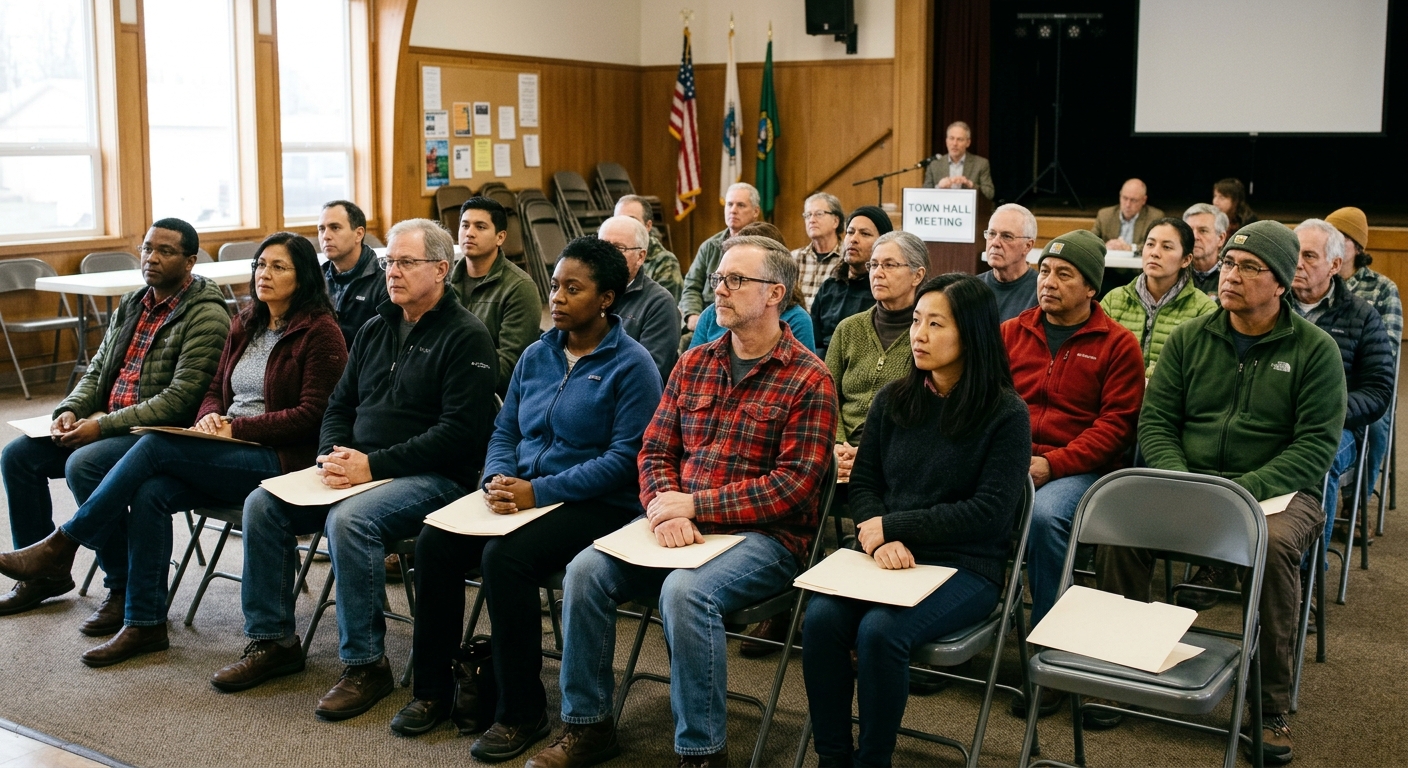
AI-generated illustration; not a photograph of the reported event.
- calendar_today November 13, 2026
Community Leaders Gather to Respond to Medicaid and SNAP Cuts
More than 100 representatives from community organizations assembled at the Lynnwood Event Center on Tuesday to discuss the effects of recent medicaid cuts and changes to the Supplemental Nutrition Assistance Program (SNAP) in Washington. The event, hosted by the Verdant Health Commission, focused on informing attendees who serve tens of thousands in Snohomish County about significant changes to public benefits.
Legislative Changes and Their Immediate Effects
In July 2025, Congress passed a spending bill that introduced sweeping cuts to Medicaid and SNAP. Some changes are already active, while new medicaid work requirements will take effect on January 1. The new policies are expected to remove exemptions and narrow eligibility, with further changes scheduled through 2028.
Revised Medicaid Requirements and Exemptions
Giselle Zapata-Garcia of Public Health – Seattle and King County detailed upcoming Medicaid eligibility criteria. Adults on Apple Health for Adults must earn at least $580 monthly, attend school at least half-time, or log 80 hours monthly in work, community service, or work programs. Exemptions include people who are pregnant, foster youth or former foster youth under 26, and disabled veterans, among others. Washington clients will need to renew medicaid eligibility every six months. By the end of 2027, the Washington State Health Care Authority estimates at least 200,000 people in the state may lose coverage. Changes for lawfully present immigrants went into effect in October 2026, affecting an estimated 10,000 people.
Healthcare and Food Assistance Options Remain
Despite the medicaid cuts, some alternative healthcare options exist, including Emergency Medical, Pregnancy Medical, After Pregnancy Coverage, and Medical Care Services. Consumers may also buy medical and dental plans via Washington Healthplanfinder, with open enrollment ongoing through January 15. Zapata-Garcia emphasized the importance of checking eligibility with a certified health insurance navigator. Additionally, King County will host an open enrollment event in Everett on November 21 to help disseminate accurate information about public benefits.
SNAP Cuts and Adjustments
Changes to snap cuts involve stricter work requirements: only people aged 65 or older or those caring for a child under 14 are now exempt from working 80 hours monthly. Military veterans, people who are homeless, and those previously exempt at age 55 or caregivers of children under 18 have lost their exemptions. Some immigrants are being moved from federal SNAP to state-funded food assistance without need for reapplication. Maricruz Sanchez of Help Me Grow Washington noted that while benefit amounts should remain constant for these individuals, reductions to other support programs like the Low-income Home Energy Assistance Program may affect SNAP benefits for some households.
Community Support for Housing and Utilities
Discussion at the event also included housing assistance and utility assistance. After the local 211 hotline relocated services to Seattle, Volunteers of America Western Washington launched VOAWW Connect and a new support line to sustain local referral and coordinated entry services. Missy Wilch, energy assistance program manager at Snohomish County PUD, highlighted ongoing efforts in raising awareness of bill assistance and cost-reducing initiatives like conservation and weatherization, and called for strong partnerships with other community organizations. "We are literally the connection point," Wilch said, referring to PUD’s extensive presence in local homes.
Ensuring Access Amid Change
Speakers stressed the critical role of accurate information to ensure eligible residents do not forego food assistance or healthcare amid ongoing changes. As Maricruz Sanchez stated, "Sharing accurate information right now is critical, helping to counter some of the misinformation that might be going around. Again, not everyone is losing benefits."
For more information on current and upcoming changes or to seek assistance with public benefits, community members are encouraged to contact local organizations, explore state program websites, or attend local open enrollment events.
Source: heraldnet.com.