- calendar_today April 9, 2026
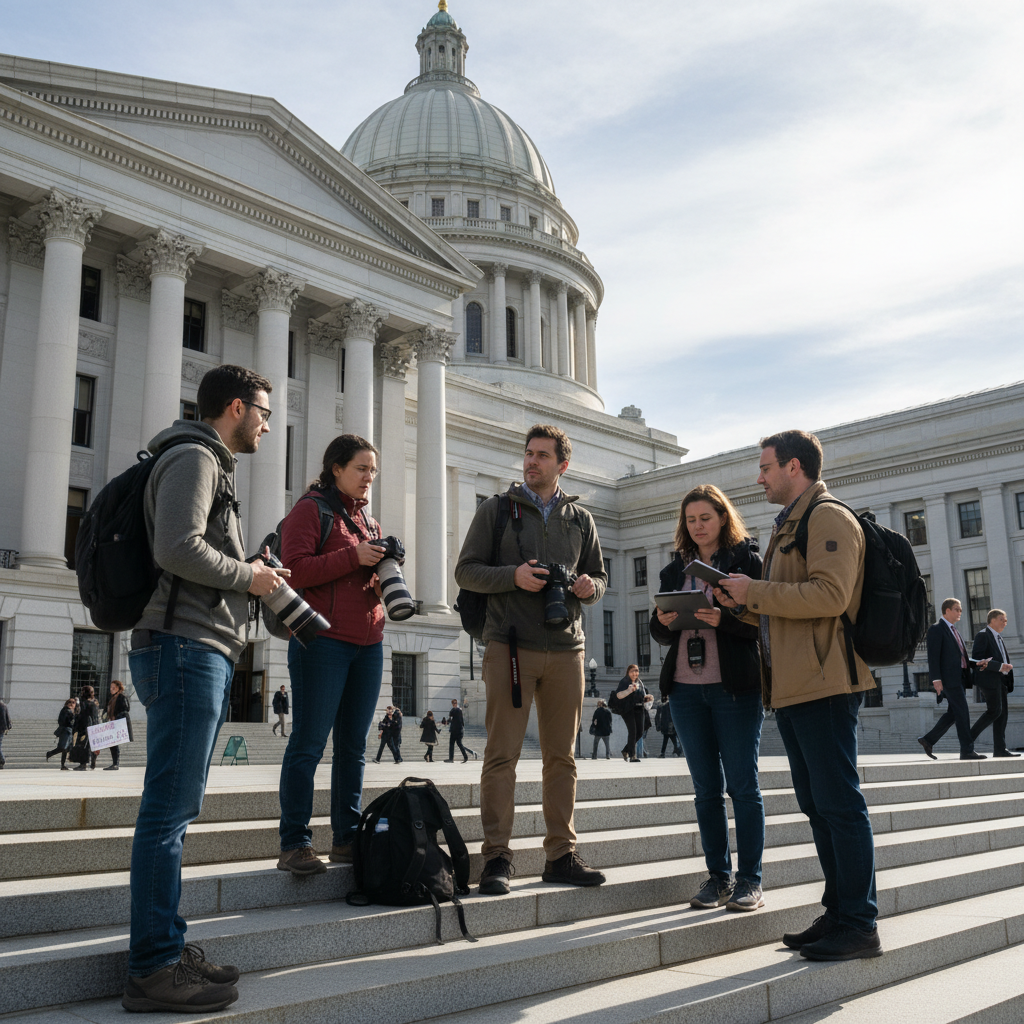
Olympia, Washington State — In a move drawing widespread attention across the region, a federal judge has upheld the decision to deny permanent Olympia press corps credentials to three media figures with records of political activism. The ruling by U.S. District Court Judge David Estudillo affirms the Washington Legislature’s efforts to safeguard a clear boundary between journalism and political advocacy, a stance that has stirred discussion on the evolving role of media access in polarized times.
Background: Partisan Figures Seek Press Passes
The controversy first emerged when Brandi Kruse, a right-leaning podcaster and former Fox 13 reporter, applied for permanent press passes to the Democratic side of the Washington House chamber. Kruse was joined by allies Jonathan Choe and Ari Hoffman, who have each been associated with political activism and public advocacy activities beyond traditional reporting. Their applications invited scrutiny given ongoing debates over who qualifies for legitimate press credentials in an era of blurring lines between commentary and reporting.
Legislative Rules Divide Chamber Access
Legislative leaders on the democratic side cited their obligation to preserve the chamber’s integrity, determining that applicants with overt political connections should not receive the same access as career journalists. While the three can enter the Republican side of the House with escort, they are prohibited from the Democratic side, highlighting the complexities of media access when advocacy intersects with news coverage.
Judicial Ruling Favors Legislature’s Distinction
Judge Estudillo’s judicial ruling addressed the legal arguments presented by the plaintiffs, who claimed their First Amendment rights were being violated. The court concluded that maintaining a barrier between professional journalism and clear-cut advocacy is justified, especially in government institutions where impartiality must be protected. According to the ruling, the plaintiffs have not demonstrated a likely chance of success on their first amendment claim, allowing the existing policy to stand.
Press Freedom Debates Strengthen
The dispute has intensified discussions over the definition and limits of press freedom within legislative bodies. Some regional media organizations in Washington State voice support for legislative policies that distinguish established reporting from political activism, while others contend such distinctions might hinder accountability and the diversity of voices within the press corps. Notably, the Olympia press corps prides itself on covering the Washington Legislature’s developments for the public, an endeavor complicated when political journalism contests the traditional objective role of reporters.
Impacts on Political Journalism
As the plaintiffs signal their intent to continue legal challenges, the case underscores the evolving boundaries of political journalism and the standards for granting press credentials in state government. With increased polarization affecting not only political discourse but reporter access itself, Washington State’s legislature faces mounting questions about whom to accredit and the precedent such decisions set for other states and institutions.
Looking Ahead: Legal and Regional Implications
Observers in Washington State anticipate further legal wrangling as Kruse, Choe, and Hoffman push for broader media access. Their persistence reflects ongoing debates over media rights in a climate where the roles of advocacy, reporting, and commentary often overlap. As the boundaries between legitimate journalism and political activism are tested, local communities, press institutions, and lawmakers alike will have to navigate the balance between openness and impartiality in reporting on the washington legislature.
Ultimately, the court’s decision reaffirms the necessity of clear standards for the Olympia press corps and preserves a distinction crucial to protecting the public trust in government news coverage across Washington State.