- calendar_today August 23, 2025
.
The U.S. government just became Intel’s largest shareholder after President Donald Trump approved a 10% stake in the troubled U.S. chipmaker. The move broke with Republican orthodoxy and sparked condemnation from Trump allies that ordinarily would never dare to criticize him.
In a characteristic, reality-show flair, Trump tweeted out the news to his millions of followers with a boast that the investment “makes our country far richer and richer,” and a promise that it would “turn around very quickly.” Trump is banking that most voters will be won over by his confidence. But his critics have another term for this kind of big-government, industrial-strength capitalism: socialism.
GOP figures are lining up to say just that, asking whether Trump’s move in Intel crosses a line that most Republicans for 40 years have been at pains to defend. For at least a generation, many Americans have accepted the argument from leaders of both parties that socialism is what the Soviet Union had, not what the U.S. has. Socialism, under that definition, is state control of the means of production in society’s name.
By that test, Trump critics are arguing, his decision to take a 10% stake in Intel is not that different from moves by President Xi Jinping in China or President Vladimir Putin in Russia.
Trump supporters ask whether an economic crisis does not justify an exception to traditional Republican economic doctrine in the name of jobs and investment. The answer, these conservatives say, is no, especially when President Biden and congressional Democrats are spending big, too, as they just did with the Chips Act in February.
Conservative Apprehensions
Last summer, Trump said he was considering a government investment in Intel. He put the plan on hold to appease those critics, some of whom warned darkly that Trump was on a path to Stalinism. During the debate in August, Larry Kudlow, Trump’s former top economic adviser, called the Intel idea “really bizarre” and “an act of crony capitalism.”
On Thursday, Trump again cast the move as a win-win deal in which the government got a smart investment and Intel got a much-needed shot in the arm. “This is not a bailout. It’s a smart investment,” Trump said during an interview on Sean Hannity’s radio show.
Kudlow, who now hosts a show on Fox Business, told a reporter for that channel that he was “very, very uncomfortable with that idea.” Steve Moore, an informal Trump adviser, was blunter: “I hate corporate welfare. That’s privatization in reverse. We want the government to divest of assets, not buy assets. So terrible, one of the bad ideas that’s come out of this White House.”
The right-leaning National Review put out an editorial saying “government shouldn’t get into the chip business.” Senator Thom Tillis tweeted that the Intel deal “moves us toward a semi-state-owned enterprise a la CCCP.” (The U.S.S.R.) Senator Rand Paul followed up on that theme in a tweet: “Wouldn’t the government owning part of Intel be a step toward socialism? Terrible idea.”
Senator Bernie Sanders, a liberal, saw the Intel move in the opposite light: as an example of how government can use its influence to reshape the industry in the public interest.
Commerce Secretary Howard Lutnick quickly took to Twitter to argue that Trump’s move was a win for capitalism. On Laura Ingraham’s Fox News show, he said Trump “is not socialistic at all. This is the best businessman in the United States of America in the Oval Office right now doing fair things for us.”
Intel Cautions, Warns
Intel also reacted to the news. In an SEC filing Thursday, the chipmaker said it expected the federal government’s stake to have “a negative impact” on its ability to get future government grants, on sales outside the U.S., and on its overall regulatory burden. Intel also acknowledged in the filing that the move is not “expected to have a material impact on our consolidated financial statements.”
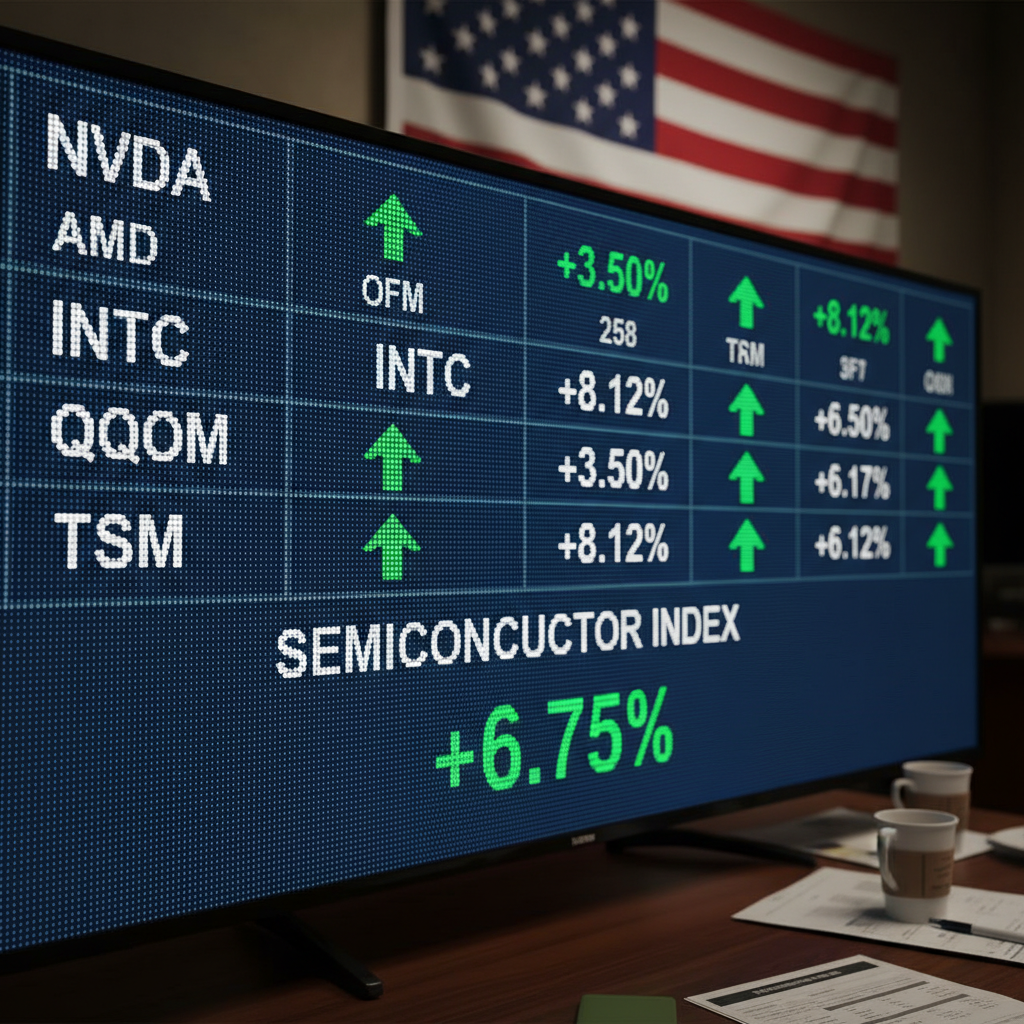
Intel, which has been struggling and earlier this year announced it was laying off 15% of its workforce, has a market capitalization of about $110 billion — half its value at the start of 2024 — but the stock did move up 4% after Trump’s tweet.
The Wall Street Journal reported Thursday that Trump initially demanded that Intel CEO Lip-Bu Tan resign over Tan’s previous investments in Chinese firms but softened after meeting him at the White House. “I liked him a lot, I thought he was very good,” Trump said.
Intel’s biggest shareholders before the government stake are now a series of passive investment funds — Capital Research Global Investors and various public and private pension funds. The U.S. will be a non-voting member of Intel’s board.
Softening on Socialism?
It’s an unusual moment in American political and economic life. By all accounts, Trump did it to help Intel and help his chances of being reelected. Intel is a symbol of American economic prowess and innovation, and Trump wants to be seen as a champion of U.S. business.
Whether it turns around, Intel is not entirely up to Trump or Intel, though. The chipmaker’s entire business model and sector are under threat. The company’s cost-cutting and loss of market value are part of a global crisis in the technology industry that could just be the early stages of a deflationary shock.
Trump allies are shrugging that off, saying he will take the credit if Intel rebounds, and will be able to blame Intel’s board and management if it does not. But one thing is certain: If Trump goes ahead with more such moves in big American companies, which he has signaled he will, Americans will have to decide for themselves whether it is socialism, capitalism, or just Trumpism.
The stakes for the country’s entire economy could turn on their answer.