- calendar_today August 7, 2025
Keeping It Real in a Digital Age: How Washington Artists Are Using AI Without Losing Their Voice
In Washington, Artists Are Listening—But Not Letting Go
Washington has always been a place where creativity meets resistance. There’s a rugged independence here, whether you’re talking about grunge-era music, independent bookstores in Olympia, or hand-thrown pottery in Walla Walla. So it makes sense that when AI in creative work started showing up, artists didn’t rush to embrace it. They paused. Asked questions. Got curious.
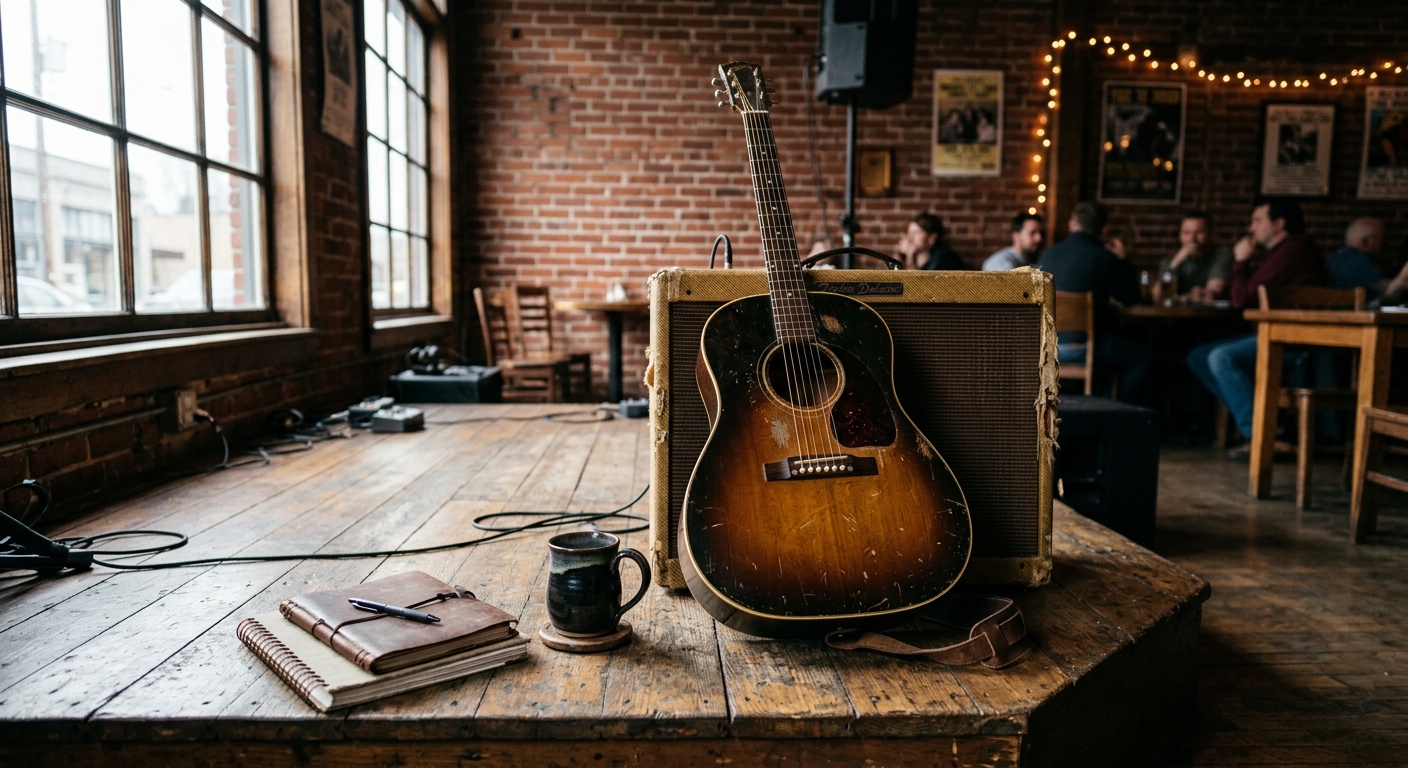
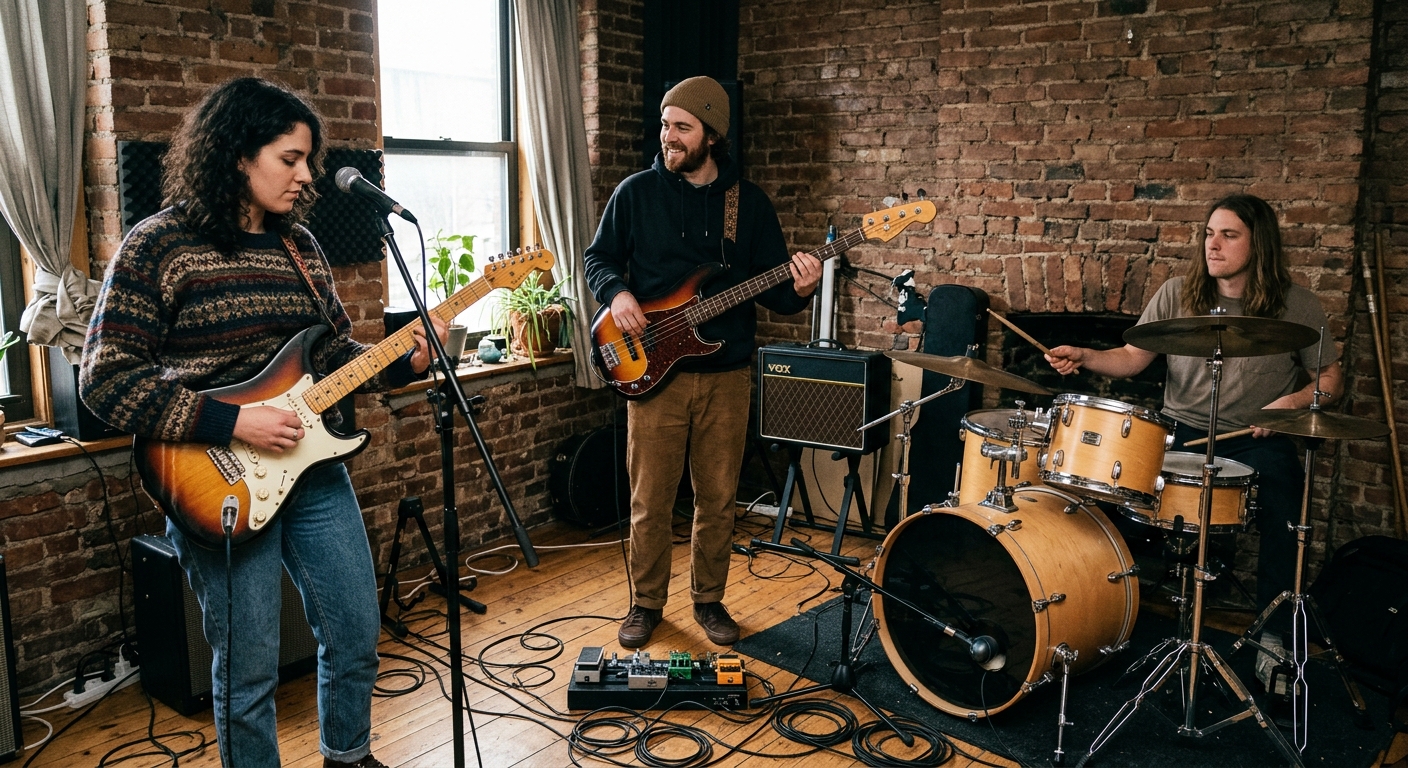
A musician I met at a house show in Tacoma told me, “I’ve used AI in music to mess with layering ideas. It’s fun, but it doesn’t replace the late-night, messy, emotional part of making a song.” That’s the balance a lot of creators here seem to be finding—experiment, but don’t lose the soul.
Filmmakers Are Using AI to Save Time—Not to Tell the Story
Seattle’s indie film scene is thriving, from experimental shorts in Capitol Hill to documentary projects rooted in the coastal towns of the Olympic Peninsula. Many of these filmmakers are using AI storytelling tools for things like organizing clips, transcribing interviews, or helping storyboard faster.
One director in Bellingham shared, “It helped me sketch out beats in my script, but the heart of the story still came from real experiences. I just got there a little faster.” That’s how Washington creatives are using AI—not to define their work, but to support the process.
Artists Are Bringing AI into the Studio—But Just for the Brainstorming
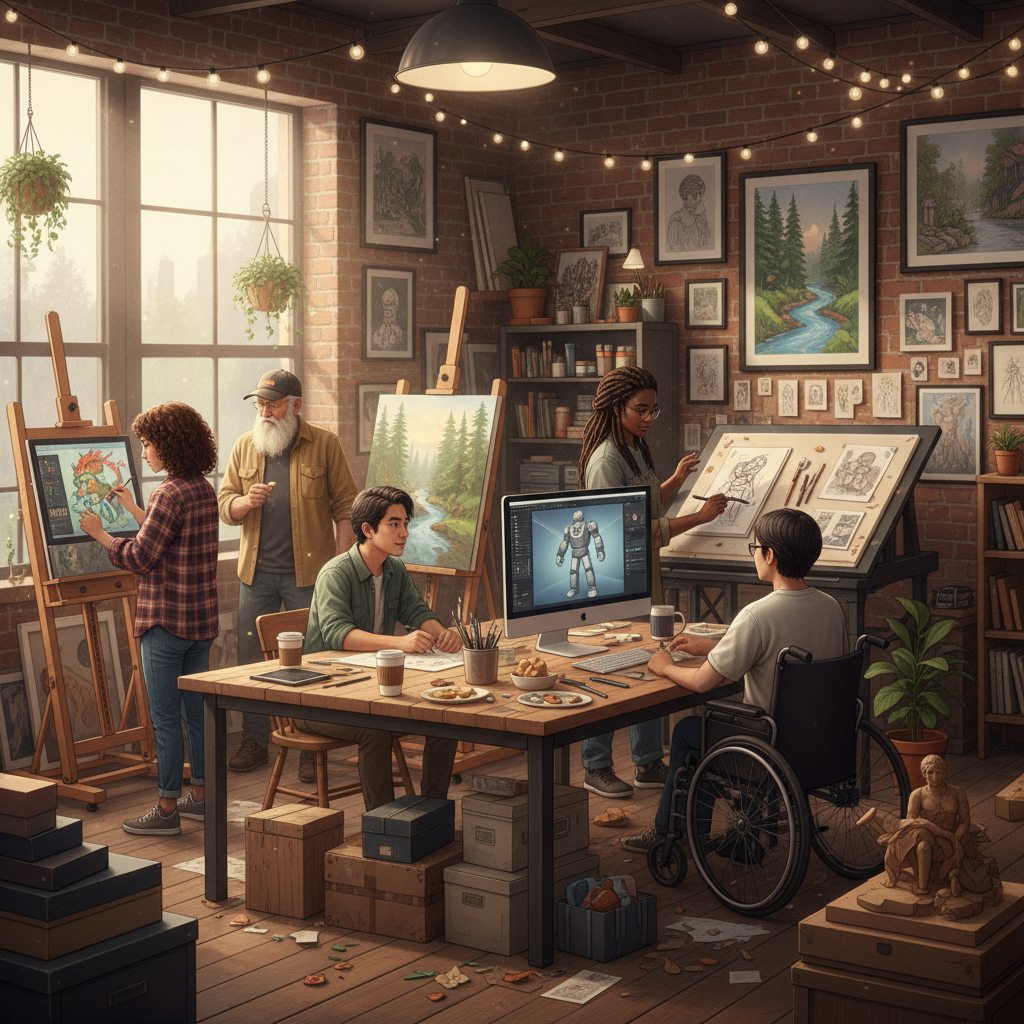
Visual artists across Washington—from Spokane galleries to the murals of Seattle’s SoDo district—are starting to explore AI in visual art as a way to break out of creative blocks. But nobody’s handing over the brush just yet.
A sculptor in Olympia told me, “Sometimes I’ll run a sketch through AI to play with shadow or proportion. It helps. But the texture, the emotion—that’s still mine.” Artists here are hands-on, often tactile, and deeply invested in the feel of their work. AI might help them see something differently—but it doesn’t make the piece.
Students Are Merging Tech with Story—Without Losing the Message
At the University of Washington and Western Washington University, young creatives are exploring creative tech in Washington—but with a strong emphasis on story and meaning. From immersive installations to interactive zines, students are using AI as a tool—not a voice.
One senior in Pullman built an AI-driven video piece based on family history. “The tech shaped how people experienced it,” she said. “But the core of it—the memories—that was all mine.” That’s a common thread here: AI isn’t erasing the personal—it’s helping shape how it’s shared.
Some Creators Are Saying “No Thanks”—And That’s Valid, Too
Not everyone’s jumping in. A printmaker in Port Townsend told me flat-out, “I like how long my work takes. I like the slow process. I don’t want something that shortcuts that.” In Washington, where craft and community go hand in hand, speed isn’t always the goal—and pressure to innovate doesn’t always land well.
And here, saying no to tech isn’t about being out of touch. It’s about being honest about what matters to you.
How Washington Artists Are Actually Using AI
• To spark ideas – Musicians and painters use AI to break through creative blocks
• To organize work – Filmmakers and writers use it to sort footage or generate structure
• To test layouts – Visual artists try out form and composition before creating final pieces
• As a companion, not a creator – Artists across disciplines are keeping control of their message
Final Thoughts
Washington has always stood a little apart—creative, bold, and intentional. That hasn’t changed. But now, as AI becomes part of the creative conversation, artists here are asking the right questions: Does this serve the work? Does it say what I want it to say? Does it still feel like mine?
Some are diving in. Others are holding back. Most are somewhere in the middle—using AI when it makes sense, but never letting it speak louder than the human behind the work.
Because here in Washington, the story still matters. And who tells it? That matters even more.