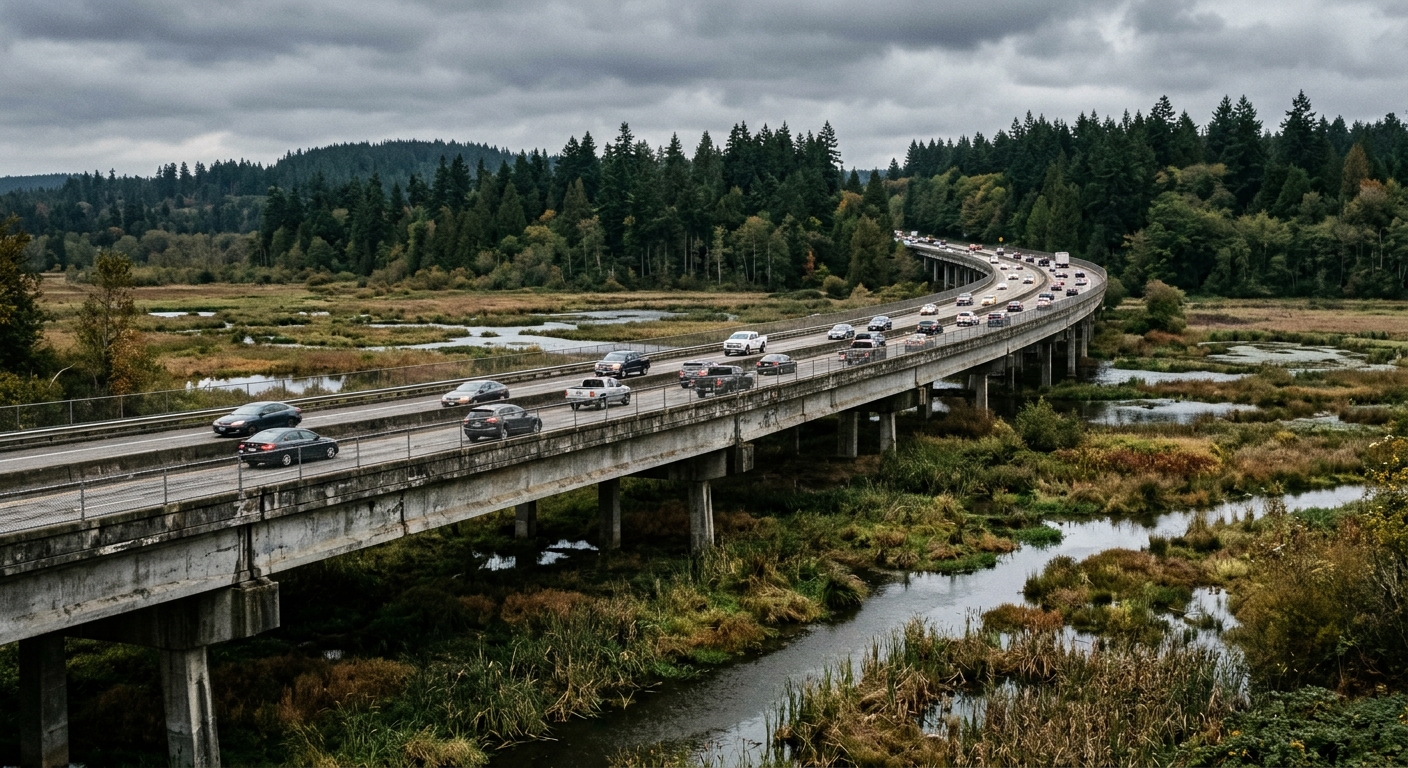
AI-generated illustration; not a photograph of the reported event.
WSDOT Unveils Plans for US 2 Trestle Replacement
The Washington State Department of Transportation (WSDOT) has announced its preferred design for replacing the aging US 2 trestle, a key connection between east Snohomish County, Everett, and Interstate 5. The agency revealed the plans during a state Senate committee meeting in Everett, setting the stage for a significant infrastructure upgrade in the region.
Key Features of the New Trestle Design
The proposed design calls for three lanes in each direction along the trestle, with full-width shoulders to improve safety and mobility. Notably, one lane in both directions will serve as a High Occupancy Vehicle (HOV) lane, reserved for transit vehicles and carpooling drivers to facilitate better traffic flow and transit improvements. Additionally, the plan includes a dedicated path for cyclists and pedestrians on the north side of the westbound highway, enhancing multimodal transportation options.
Enhanced Connectivity for Everett
Cameron Kukes, assistant regional administrator at WSDOT, detailed that three westbound off-ramps will connect drivers directly into downtown Everett, with exits for California Street, Everett Avenue, and Hewitt Avenue. One ramp will feature an HOV-access lane for easier transit access to Everett Station. Meanwhile, the ramps connecting the trestle to I-5 are set to be rebuilt and expanded to two lanes in each direction, aiming to alleviate persistent traffic congestion.
Addressing Local Traffic and Safety Issues
The east side of the trestle will see new lanes added between the trestle and 20th Street Southeast as well as onto US 2, as part of the broader design to maximize traffic efficiency. Kukes emphasized the significance of improving connections to the surrounding roadway network, stating, "It didn’t really matter how many lanes you put on the new trestle itself if you didn’t address the connections to the surrounding transportation network." WSDOT highlighted that the current structure is subject to heavy traffic congestion during peak hours and remains at risk of instability in the event of a major earthquake.
Planning, Public Input, and Environmental Review
WSDOT is set to release its draft planning and environmental linkages study, which incorporates the preferred trestle design, in December. The open house will provide community members a chance to view the plans and offer feedback. The public comment period will extend through January, ensuring that local voices are heard in the decision-making process.
Funding and Construction Timeline
Allison Krutsinger, director of external affairs at WSDOT, projected that the cost of the trestle replacement could range from $2 billion to $4 billion, though she stressed these estimates are "very, very preliminary." Funding may include contributions from federal, state, and local sources, and the introduction of tolling is under consideration, though no decisions have been finalized. WSDOT is also exploring the possibility of a public-private partnership to help finance the project.
Depending on securing sufficient funding, construction could begin as soon as 2032, with completion estimated to take between six and ten years. These plans unfold against the backdrop of other major transportation investments in the state, such as the substantial $14 billion I-5 bridge replacement project over the Columbia River.
Community Support for Infrastructure Upgrades
Community leaders underscored the trestle’s regional significance during the committee meeting. Ray Stephanson, CEO of Economic Alliance Snohomish County and former Everett mayor, described the trestle as a "Puget Sound regional issue." Everett Mayor Cassie Franklin emphasized the importance of proactive investment, warning that deferring action would only increase costs and disruptions. Ric Ilgenfritz, head of Community Transit, said two-way HOV lanes would be "critical to effective transit" in the corridor and would facilitate better countywide transit service.
Next Steps for the US 2 Trestle Replacement
WSDOT will continue technical analysis, public engagement, and stakeholder consultation before any final decisions are made. The upcoming open house and public comment period will be instrumental in shaping the final design and funding strategies for the US 2 trestle replacement, a vital infrastructure upgrade for Everett and the larger region.
Source: heraldnet.com.
More News stories from washingtonupdatesnow
Recent Posts
Google Ads
add ads hereHot Categories
83
Business
43
Education
38
Entertainment
50
Events
18
Investing
7
Lifestyle
109
News
1
Real Estate
49
Sports
49
Technology
Tag