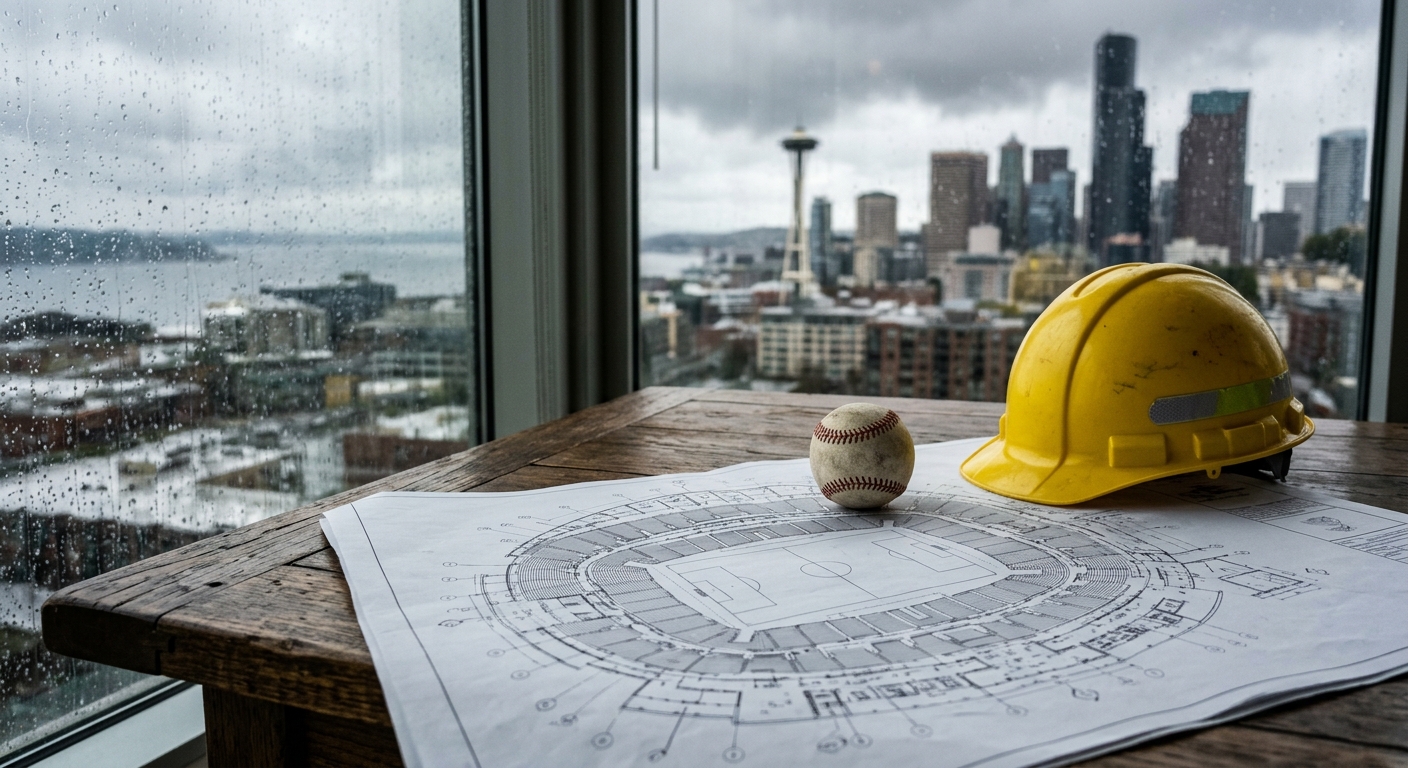
AI-generated illustration; not a photograph of the reported event.
- calendar_today November 7, 2026
Plans to Use Transit Merger Funds Revealed
The City of Everett has announced a plan to allocate $33 million acquired from its recent merger agreement with Community Transit to help fund its proposed downtown stadium project. The details of this allocation are included in Everett’s financial plan for the stadium, set to be publicly released following a recent interview with city officials.
Rising Costs for the Stadium Project
Everett’s stadium project, known as the Outdoor Event Center, has seen its projected total cost increase by $24 million since the start of the year, now estimated at $144 million. City staff attribute these cost increases to higher property acquisition and construction expenses. The stadium, which would be built between Pacific Avenue and Hewitt Avenue east of Broadway, would seat 5,000 people and feature a walking path, according to design plans.
Transit Merger and Financial Overview
The merger between Community Transit and Everett Transit was finalized on Thursday and will be effective from April 1, 2027. Under the terms of the consolidation agreement, Community Transit will pay Everett approximately $54 million for transit property and assets. Everett’s current transit reserves, added to this sum, bring the city’s available transit funds to over $80 million. The city has divided this into investments toward economic development and transportation infrastructure.
Of this, $30 million will directly support the stadium project, $2 million is earmarked for an unspecified project in south Everett, and about $3 million will fund street improvements around the stadium site.
Stadium Project Funding Sources and Debt Financing
Everett’s financial plan includes issuing $92 million in debt for the stadium’s construction. Other capital contributors include the city, the State of Washington (about $7 million), Snohomish County ($10 million), the Everett AquaSox ($10 million), United Soccer League ($7 million), and an unnamed business partner who has contributed $5 million tied to stadium naming rights. The plan still requires approval from the Everett City Council.
Additionally, the city will use revenue from a recent overhaul to its business and occupation tax, expected to generate up to $2.9 million annually for the project. The financial plan outlines that the city will open a $92 million line of credit for construction costs, converting this into long-term general obligation debt post-completion. The estimated interest rate for the loan is 6.3%, translating to an average annual debt service of about $6.2 million over 30 years. Stadium operations, leases, and facility fees are projected to bring in about $4.1 million annually, and B&O tax revenues will be used to cover much of the remaining debt service.
Lease Agreements and Tenants
The stadium will host both the Everett AquaSox and a men’s United Soccer League team, with possible inclusion of a women’s team. Lease agreements under negotiation are estimated to total nearly $70 million over 30 years, plus ticket fees paid by the sports teams. The United Soccer League team would act as the facility’s primary tenant due to its expected higher number of events.
City Council and Public Response
The spending plan marks the first time Everett has publicly shared its intentions for the transit merger funds. Deputy Mayor Mike Fong stated that the allocation strategies have been broadly outlined to the city council. Council members and city staff emphasized that the vote for the merger was separate from decisions on stadium spending, which will come before the council in a subsequent meeting scheduled for December 2.
Not all reactions have been positive. Steve Oss, president of Amalgamated Transit Union 883—which represents Everett Transit drivers and mechanics—voiced disappointment, saying the city prioritized obtaining funds for the stadium over maintaining transit services for the public.
Next Steps and Pending Approvals
The city council will review and vote on the stadium financial plan, budget amendments, lease agreements, construction contracts, and consultant extensions at its upcoming meeting. The council’s approval is needed to proceed with the project and to repay loans the city has already advanced for stadium planning, design, and initial land purchases. So far, the city has spent $18.1 million acquiring land for the project and holds ongoing negotiations and legal proceedings for additional parcels.
Source: heraldnet.com.